Who is The Pup Scholar ?

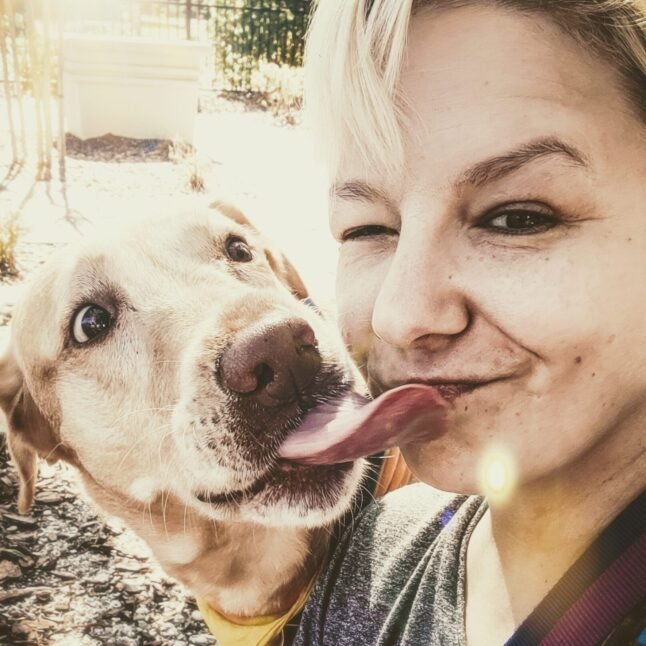
MY NAME IS SHAUNA LEE

My evolving body of work sits at the intersection of research, caretaking, science communication, and reform in both the pet care industry and the human–canine relationship.

I am a developing theorist, professional caretaker, and science communicator focused on improving how humans understand, care for, and relate to dogs—particularly in an industry that remains largely unregulated and lacks clear standards for ethical, relationship-centered care.

My Philosophy: Care & The Human-Canine Bond


Primary focus: companion dogs and everyday caregiving relationships.

I do not view dogs as property or subordinates whose only purpose is to assist and obey humans. I believe that dogs are companions and relationship partners with whom we share our lives and have a responsibility to provide for and protect. Raising a dog is much like raising children, they deserve to feel loved and safe, to socialize and play, to learn, explore and most importantly, make choices.

Personal & Professional Experience

My experience as an animal caretaker began long before formal study or professional practice.

Growing up on a family farm, animals were a constant presence in my daily life, shaping how I learned responsibility, observe behavior, and provide care from an early age. That foundation later evolved into nearly two decades of animal caretaking by founding and operating Tampa Pet Sitters, work that exposed me to a wide range of households, caregiving styles, and human–canine relationships.

Across that span of experience, a consistent pattern emerged: most behaviors labeled as “problems” are better understood as miscommunication, unmet needs, or breakdowns in human responsibility and communication—particularly around emotional regulation, agency, and autonomy.

Agency is the capacity to act and make choices, while autonomy is the freedom to be self-governing, acting according to one’s own values and rules, rather than external control, though they often overlap. Agency is about having the power to influence outcomes, while autonomy is about the independence to set one’s own goals and make choices aligned with them, even within structured environments.

PSX_20221201_161913~2
null

Professional Education & Certifications

Returning to school was an intentional decision. After nearly two decades of hands-on work in the pet care industry—providing behavior consultation, training, shelter and rescue collaboration, foster support, and high-end household care—I recognized a gap between lived practice and formal theory. My goal in returning to academia was not to replace that experience, but to better understand it through scientific frameworks.

Prior to returning to university, I completed extensive professional education and certification in canine behavior, training, and safety through organizations including the Pet Professional Guild, Fear Free, the International School for Canine Psychology & Behaviour, Doggone Safe, and related continuing education programs. These certifications provided a rigorous, ethics-centered foundation in learning theory, fear- and force-free practices, canine communication, and risk assessment, and continue to inform my work today.

I am a senior psychology student at the University of South Florida, where my academic focus spans social, cognitive, and neuroscience perspectives. This academic training allows me to formally study the relational and psychological dynamics I have observed for years in real homes, families, and caregiving systems. Currently, I am focused on preparing for graduate study while continuing to develop the applied care models, educational resources supported by my research, and building sustainable pet care services to fund future community-focused initiatives.

Current Research

I am currently a research assistant in a social relationships lab studying dyadic relationship dynamics, & my primary research interest centers on the human–canine relationship as a co-regulatory system.

I am especially interested in: emotional co-regulation, cross-species bi-directional communication, and the behavioral effects of the caregiving environment—specifically how dogs perceive, process, and respond to human behavior & communication through the lens of canine cognition.

The through-line of my work is improving relationship dynamics. I approach behavior as communication that works both ways, emphasizing human responsibility, reliable caretaking, and emotional regulation within the relationship, and viewing care as stewardship rather than control. I do not believe dogs need to be managed through commands or that their daily needs are satisfied by brief exercise alone.

Future Directions

My long-term goal is to help shift how society understands canine care and companionship. This includes developing a theoretical framework that synthesizes relationship science, canine cognition and behavior research, and human–canine bond literature; establishing clearer standards and professional pathways for canine caretaking; and improving outcomes and well-being for dogs by improving the human side of the relationship.

I believe we should raise and teach dogs, learn how to communicate with them, and meet one another’s relational needs—resulting in improved well-being, mental health, and bond quality for both species.

This perspective does not oppose expert training, which is essential for working, assistance, sport, and therapy dogs; rather, it emphasizes that for strictly companion animals, relational attunement—not performance—is the primary foundation for a healthy human–canine bond.


Pup Scholar is where this work lives—for now.

It reflects my voice as a science communicator and educator while housing the applied care models I am developing to support this work. Ultimately, my aim is not just to change how people think about dogs, but to help build systems of care that are ethical, informed, and worthy of the relationships we share.